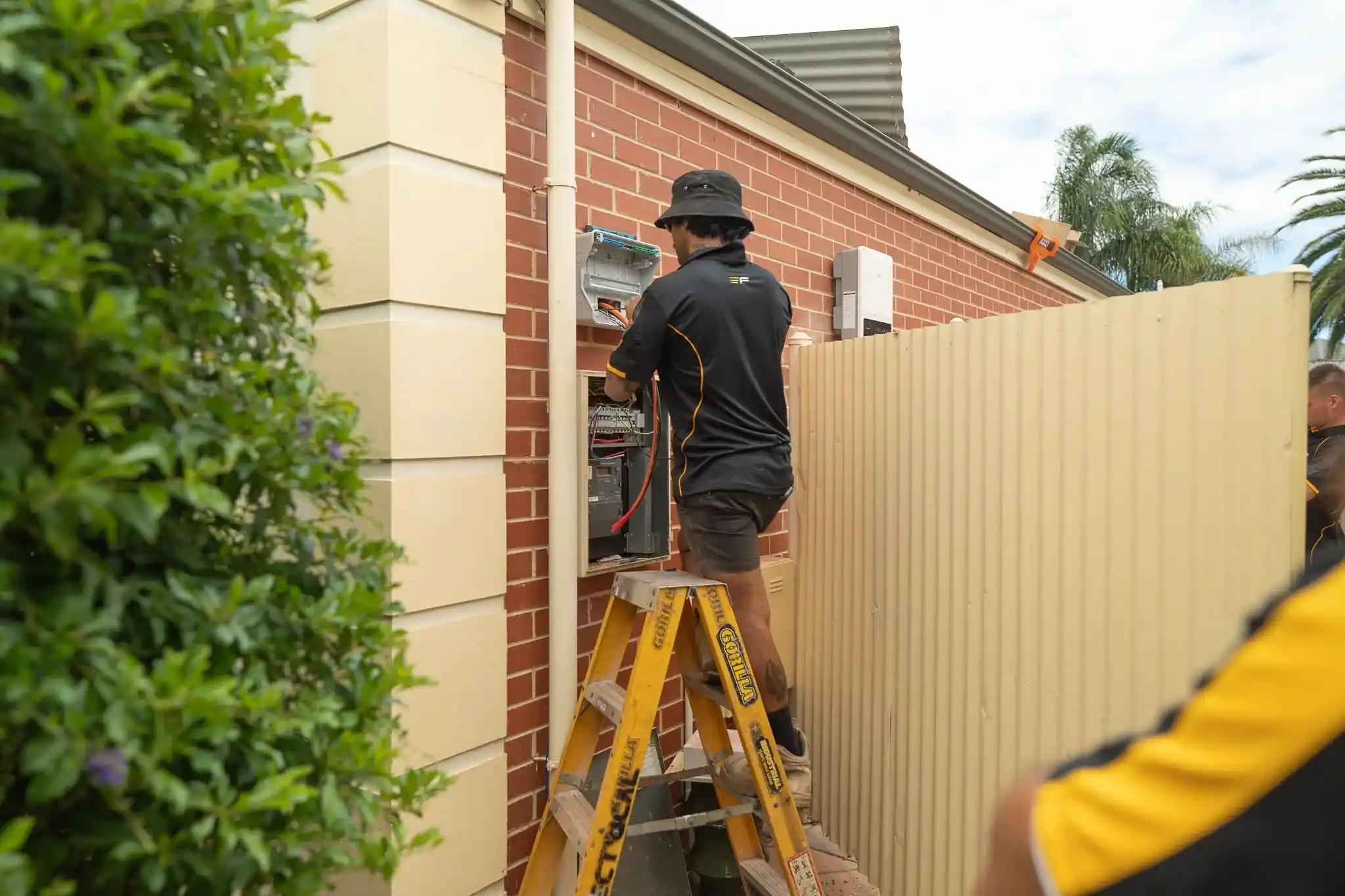
Upfront pricing and quality electrical work for homes and businesses in Brooklyn Park, from the local team at Flash Electrical SA.
"*" indicates required fields
Over 10 Years Experience

REPS Approved Installer

Upfront & Competitive Pricing

Rural and Farm Work
Project Managing All Tradesmen
Flash Electrical SA has been wiring up homes and businesses across Adelaide since 2016, and Brooklyn Park is on our regular western run.
Whether it’s a bungalow on a quiet street, a workshop or shed out the back, or a business operating off Sir Donald Bradman Drive, our licensed local team handles switchboard upgrades, LED lighting, solar and battery installs, air conditioning and general electrical repairs, all with upfront pricing and no surprises on the invoice.
Safety switches and compliant boards.
Upgrades and new installs.
Systems sized to your usage.
Split system install and servicing.
Fault finding and general electrical.
Safety switch and appliance testing.
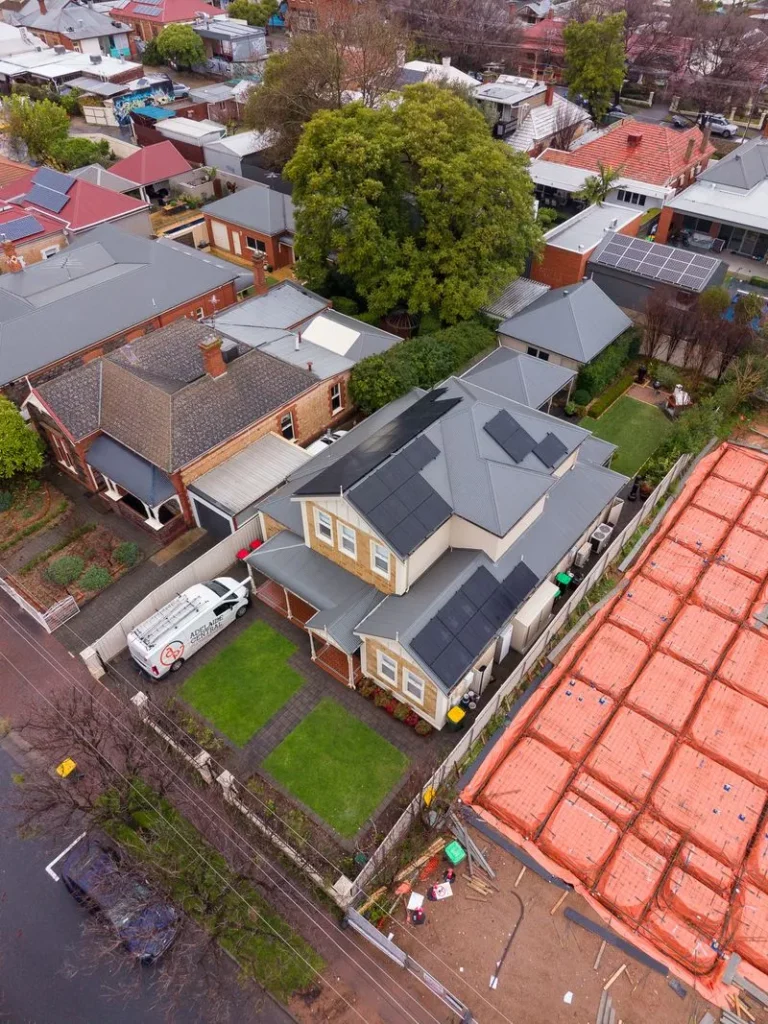
More than 47% of South Australian homes already make their own power from rooftop solar. Only about 11% have a battery to keep any of it. The rest is exported for a few cents and bought back at full price after dark, which is exactly when most households actually use it.
of homes in South Australia have Solar
have a battery to store it
federal rebate steps down again
The Cheaper Home Batteries discount shrinks at every step of the schedule, and the next one lands on 1 January 2027. That’s roughly $400 off a typical 10kWh system and around $1,000 on a large one, gone. If a battery is on the list for your place in Glenelg, the cheaper window is the one you’re standing in.
A clear price before work starts, so there’s no invoice surprise at the end.
Understand the proposed work and pricing, then approve the quote when you’re ready.
REPS approved installers, no subcontractors, same crew from quote to switch-on.
Every hour your doors are shut costs you money, so commercial work gets handled differently to a house call. We quote the scope upfront, book it around your trading hours where we can, and keep the site tidy enough to open the next morning.
Brooklyn Park’s commercial work runs along Sir Donald Bradman Drive and Marion Road, light industrial units, workshops, warehousing, trade and automotive businesses, plus retail and hospitality through the strip. Whether that’s three phase for machinery, a warehouse lighting upgrade, switchboard work or ongoing maintenance, the job gets the same licensed crew from quote to sign-off.
If the lights dip when the kettle or the air conditioner kicks in, the circuit is carrying more than it was built to carry.
If the lights dip when the kettle or the air conditioner kicks in, the circuit is carrying more than it was built to carry.
If you’re still replacing fuse wire, the board is older than safety switches are and it’s well past due for an upgrade.
Share your project and location. We’ll discuss the scope and arrange a site visit if needed.
Understand the proposed work and pricing, then approve the quote when you’re ready.
We’ll schedule your job, coordinate the work and take you through the completed project.
Flash Electrical SA runs out of a warehouse at Dudley Park, with crews covering homes and businesses throughout metropolitan Adelaide, plus rural and farm work further out. If you’re closer to the coast or the inner north, we’re already working in your area.
Properly means a sub-main, not an extension lead. A dedicated supply is run from the main switchboard out to the shed, usually underground in conduit at the required depth, terminating in its own small switchboard with its own breakers and RCD protection. That gives you circuits you can actually use, a way to isolate the shed, and protection that does not depend on remembering to plug into the right outlet. What decides the cost is mostly the cable run and whether the trench crosses driveways or paving, and what decides the cable size is the distance plus what you intend to run out there, so it is worth telling us about the welder or the compressor now rather than after it is in the ground.
Think about it in three parts. Power: enough circuits and capacity for whatever tools or equipment you are running, which is the part most people underestimate, and a dedicated sub-main if the garage is detached. Lighting: workshop lighting is a different specification to a garage, and getting the levels right is the difference between a usable space and a frustrating one. Safety: RCD protection on everything, and outlets positioned so you are not running leads across the floor. If it becomes a space where customers or staff come, there are further obligations, and we will tell you what applies rather than leaving you to find out.
Most homes do not, and most people asking have been told they might by an equipment supplier. Three phase supplies power over three conductors instead of one, and it is needed when you have equipment that specifically requires it, commonly larger machinery, some workshop equipment, large ducted air conditioning, commercial refrigeration or larger solar and battery systems. In Brooklyn Park it comes up regularly because of the mix of workshops and light industrial. If you are unsure, the answer comes from the equipment list rather than the building, so send us what you are planning to run and we will tell you straight whether you need it or whether single phase will carry it.
South Australia introduced minimum housing standards for rental properties, and they apply from the start of a tenancy under the Residential Tenancies Act. The electrical elements are broad rather than a checklist of components: the property must have a continuous supply of electricity, all electrical work must comply with the relevant law, the premises must not present a fire hazard, and compliant smoke alarms must be fitted. In practice that means unsafe or non-compliant past work is your problem, not the tenant’s. The Housing Safety Authority sets out the standards and Consumer and Business Services covers the tenancy side. If you own a rental here and have never had the installation assessed, that is the gap worth closing.
Sometimes, and the honest answer requires looking rather than guessing. What we check is the incoming supply capacity, whether you are single or three phase, the existing load on the board, physical space for additional protection, and whether the new equipment needs dedicated circuits or has particular starting current demands, which is the part that catches people out because a motor draws far more on startup than it does running. Getting this assessed before the machine is delivered is considerably cheaper than after, and it is a conversation worth having at the point you are still choosing equipment.
You need a registered cabler, which is a separate registration to an electrical licence, though plenty of electricians hold both. Any cabling connected to the telecommunications network has to be installed by someone registered under the ACMA’s cabling provider rules, and that includes data points, phone and network cabling in a home or business. It is not a formality: badly installed data cabling in the same space as power cabling creates both a performance problem and a safety one. The ACMA publishes the cabling provider rules and what registration requires if you want to check who you are hiring.
Almost always one of three things, and they need different fixes. Overload: the circuit is carrying more than it is rated for, so the breaker does its job, and the fix is a dedicated circuit rather than a bigger breaker. Earth leakage: the appliance is leaking current to earth and the safety switch is catching it, which usually means the appliance is faulty and should be tested before it goes back into service. Or startup current: a motor pulls a large surge on starting, and if the protection is not the right type for it, it will nuisance trip even though nothing is faulty. The one thing worth not doing is repeatedly resetting it, because two of those three are real faults.